# Unsupress contacts
Removing contacts from suppression lists in Bird requires careful consideration of compliance rules and proper procedures. This guide explains when and how to unsuppress contacts while maintaining regulatory compliance and best practices.
### Understanding the Two-Step Process
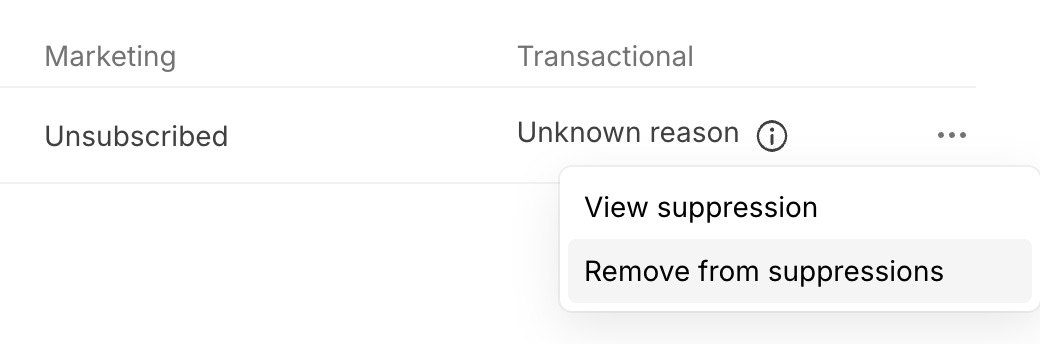
A critical aspect of Bird's suppression system is that **subscription status and suppression status are managed separately**. This is important: if you manually change a contact's subscription status back to "Subscribed," it does not automatically remove them from the suppression list. You must unsuppress them as a separate action.
This separation exists because contacts can be suppressed for multiple reasons beyond just unsubscribing, including hard bounces, invalid email/phone and manual suppressions. Each reason requires different handling.
### When Can You Unsuppress Contacts?
Not all suppressions should be removed. Understanding the type of suppression is essential before attempting to unsuppress a contact.
#### Suppressions You Can Remove
**Manually Added Suppressions:** If you or your team manually added a contact to the suppression list, you can remove them at any time through the platform interface.
**Resolved Technical Issues:** If a contact was suppressed due to a temporary delivery problem that has been resolved, you may unsuppress them after confirming the issue is fixed.
**Contact Re-Authorization:** When a contact provides fresh, explicit consent to receive communications again after previously unsubscribing, you can unsuppress them.
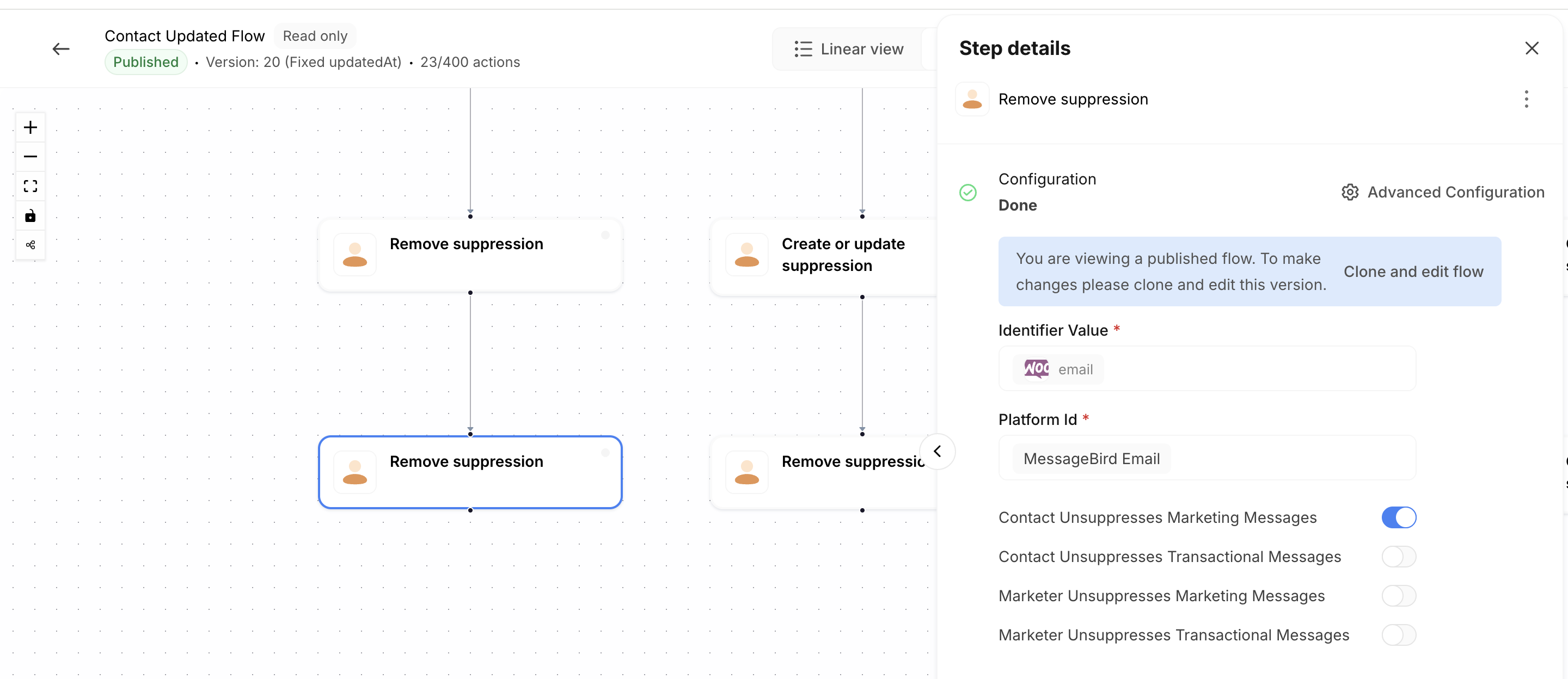
In such cases, you can create a flow with **Remove suppression** step
#### Suppressions That Require Customer Action
**Compliance Blocks from Unsubscribes:** When a customer explicitly unsubscribes by clicking an unsubscribe link or sending "STOP" via SMS, only the customer can remove this compliance block. They must actively re-subscribe by texting "START" or another opt-in keyword, or by submitting a new sign-up form with explicit consent.
You cannot remove these compliance blocks manually—doing so would violate legal requirements and undermine the purpose of the suppression system.
#### Suppressions You Should Not Remove
**Hard Bounces/Invalid Email:** Email addresses that consistently hard bounce indicate permanent delivery failures. These should remain suppressed to protect your sender reputation and deliverability rates.
###